Beyond the Drama Triangle: How to Step Out of Unhealthy Relationship Patterns
Have you ever found yourself repeatedly rescuing other people, feeling like nothing ever goes your way, or becoming increasingly critical and frustrated with those around you? If so, you may have unknowingly stepped into what psychologist Stephen Karpman called the Drama Triangle.
Originally developed in 1968 as part of Transactional Analysis, the Drama Triangle offers a simple yet powerful way of understanding why some relationships become emotionally exhausting. It highlights how, when we stop taking responsibility for our own thoughts, feelings or behaviours, we can become caught in repetitive roles that keep conflict and resentment alive rather than resolving it.
The good news? Once you recognise the pattern, you can begin to step out of it.
What is the Drama Triangle?
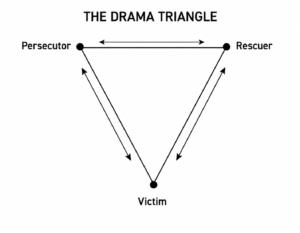
The Drama Triangle describes three familiar roles that people unconsciously move between during conflict:
- Victim
- Rescuer
- Persecutor
Although we may naturally identify with one role more than the others, most people rotate between all three depending on the situation. The real drama isn’t simply the roles themselves—it’s the constant switching between them.
The Victim
The Victim isn’t necessarily someone who has experienced genuine victimisation. Instead, this role describes a mindset of feeling powerless, overwhelmed or unable to influence events.
Someone in this position may:
- Feel life is happening to them.
- Believe someone else must solve the problem.
- Feel emotionally flooded or disconnected from their emotions.
- Struggle to take responsibility for the next step.
This doesn’t mean their feelings aren’t real—they absolutely are. But remaining in this position can make it difficult to see available choices.
The Rescuer
The Rescuer often appears kind, caring and helpful. On the surface, these qualities seem positive. Rescuing becomes unhealthy when someone:
- Takes responsibility for another adult’s emotions.
- Constantly offers solutions that haven’t been asked for.
- Feels responsible for keeping everyone happy.
- Says “yes” when they really want to say “no.”
- Neglects their own needs while looking after everyone else’s.
Many rescuers eventually become exhausted, resentful or burned out because they give more than they can realistically sustain.
The Persecutor
The Persecutor isn’t always aggressive or openly hostile. This role can show itself through:
- Criticism
- Blame
- Control
- Sarcasm
- Passive-aggressive behaviour
- Irritability
The underlying message is often: “You’re the problem.” The Persecutor positions themselves as being “one up” while viewing others as inadequate or at fault.
Why We Keep Switching Roles
Perhaps the most fascinating part of the Drama Triangle is that nobody stays in one role for very long. For example: A parent constantly rescues an adult child. Eventually they become exhausted. “I do everything for you and you never appreciate it!”
They’ve now shifted from Rescuer to Persecutor. The adult child, who previously appeared helpless, responds with anger. “You never listen to me!”
Now the original Rescuer feels misunderstood and becomes the Victim. Round and round the cycle goes. These role changes happen surprisingly quickly and often without anyone noticing.
Everyday Examples
The Drama Triangle appears everywhere:
- Couples who argue about the same issues.
- Families where one person always “holds everything together.”
- Workplace conflicts between colleagues.
- Friendships where one person constantly provides emotional support but rarely receives it.
- Parent-child relationships where independence never quite develops.
Many people can probably recognise moments when they’ve occupied every corner of the triangle.
Stepping Into the Winner’s Triangle
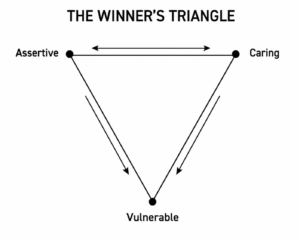
Thankfully, there is a healthier alternative. The Winner’s Triangle replaces the reactive roles with more emotionally mature responses that encourage personal responsibility, healthier communication and mutual respect.
Rather than:
- Victim → become Vulnerable
- Rescuer → become Caring
- Persecutor → become Assertive
These are subtle but powerful shifts.
From Victim to Vulnerable
Healthy vulnerability means acknowledging: “I’m struggling.” Rather than expecting someone else to solve the problem, vulnerability allows us to ask for support while remaining responsible for our own choices. Developing problem-solving skills helps us move from helplessness towards empowerment.
From Rescuer to Caring
Caring doesn’t mean fixing. It means listening. It means showing empathy. It means allowing someone else the dignity of finding their own answers while knowing you’re alongside them. Often, the greatest gift we can offer isn’t advice—it is feeling truly heard. The Winner’s Triangle emphasises listening and acknowledging as the most helpful caring response.
From Persecutor to Assertive
Assertiveness is often misunderstood. Being assertive isn’t about winning, dominating or forcing someone to change. Instead, it means expressing your own needs honestly, respectfully and clearly without punishing or attacking another person. Healthy boundaries often emerge from assertive communication.
Self-Awareness Changes Everything
Whether we find ourselves rescuing, criticising or feeling powerless, the first step is simply noticing. Ask yourself:
- Which role do I naturally fall into?
- Am I taking responsibility for someone else’s emotions?
- Am I avoiding responsibility for my own?
- What would a more caring, assertive or vulnerable response look like?
Small moments of awareness gradually interrupt old patterns.
Final Thoughts
The Drama Triangle isn’t about labelling people as “good” or “bad.” It’s about recognising the unconscious roles we all slip into under stress. The aim isn’t perfection—it’s awareness. As we develop healthier ways of communicating, listening, setting boundaries and expressing vulnerability, our relationships naturally become calmer, more balanced and more authentic.
Perhaps the greatest lesson of all is this: we don’t need to rescue people in order to care for them, we don’t need to blame people to be heard, and we don’t need to remain powerless to receive support. Stepping out of the drama may be the most powerful move to make.